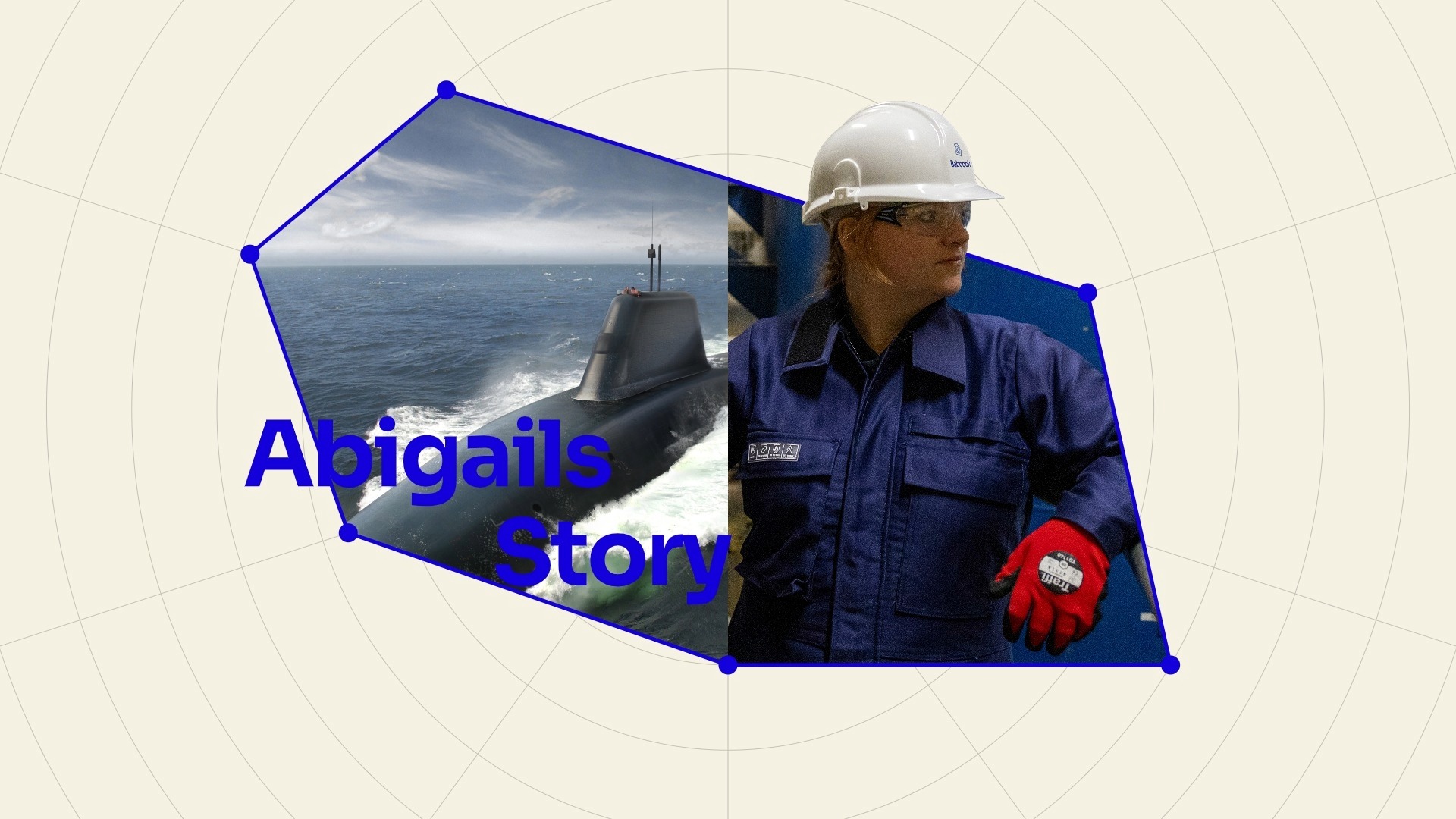
Hi, I’m Abigail and I’m a Supportability Engineer – but If you’d asked me a few years ago whether I saw myself as an engineer, I’d probably have said no.
I came into engineering from a completely different background. I have a degree in Natural History, and before joining Babcock I spent most of my career working in healthcare. Over the years I worked in a variety of NHS roles, from project and contract management to patient-facing positions. Most recently, I was responsible for pharmaceutical robots in a hospital, ensuring they were operating correctly and supporting the teams that relied on them every day.
What I didn’t realise at the time was that many of the skills I’d been using throughout my career were already engineering skills.
Why supportability matters
I’m a Supportability Engineer, which means my role is focused on understanding how systems can be supported throughout their entire lifecycle. Rather than looking at a single component or isolated problem, I take a broader view, considering how technology, people, training, information, processes and resources all fit together.
The goal is to solve problems before they become problems, and when supportability is done well, it’s often the people using and maintaining a system who feel the benefits.
Good planning can mean maintenance is carried out more effectively, resources are available when they’re needed, and potential issues are identified long before they become operational problems. That helps improve availability and reduces unnecessary disruption.
In the submarine environment, where platforms are incredibly complex and expected to operate in challenging conditions, those decisions can have a significant impact. Better supportability doesn’t just benefit the equipment itself. It helps the people who depend on it too, from maintenance teams planning their work to the crews who operate the platforms.
Discovering I was already thinking like an engineer
One of the things I’m most proud of is making the decision to move into engineering in the first place.
For years, I assumed engineering was mainly about advanced mathematics and technical calculations, and because that wasn’t my background, I convinced myself it probably wasn’t for me.
Since joining Babcock, I’ve realised that engineering is so much more than that.
It’s about curiosity. It’s about understanding how things fit together. It’s about asking questions, challenging assumptions and solving problems.
Looking back, problem solving has always been the thing I’ve enjoyed most. In previous roles, I’d learn a process and then start looking for ways to improve it. I’d ask how things could be done better, more efficiently or in a way that delivered better outcomes for the people involved.
Moving into supportability engineering made me realise I’d been thinking like an engineer for years. I just didn’t have a name for it.
Working on some of the most complex systems in the world
One thing that has really surprised me since joining the business is the sheer complexity of submarines.
When people think of incredibly complex engineering, they often think of spacecraft. But submarines face many of the same challenges. They’re self-contained environments where people have to live and work for extended periods in conditions where reliability is absolutely critical.
Everything is interconnected, and every system has to function as intended.
My work focuses on the training side of supportability. I’ve been fortunate enough to support a project from its earliest stages, helping to understand training requirements and determine the most effective solutions for future training audiences.
That can involve years of analysis, like Scoping Exercises and Options Analysis through to making recommendations on things like the right balance between realism, practicality and cost, where training is the recommended solution to a training gap. It’s another example of how supportability engineering focuses on the bigger picture rather than a single isolated problem.
Why Babcock?
Throughout my career I’ve worked in organisations of all sizes, but Babcock has been refreshingly open and collaborative. People are encouraged to ask questions, challenge assumptions and bring different viewpoints into discussions, regardless of seniority.
That’s especially important in a role like supportability engineering, where asking questions is a key part of the job.
I’ve always felt comfortable sharing ideas, offering a different perspective and contributing to conversations with people at every level of the business. That openness leads to better decisions and better outcomes.
It’s one of the reasons I’ve enjoyed making the move into engineering, and why I would encourage anyone who enjoys solving problems and improving systems to consider a career in supportability.