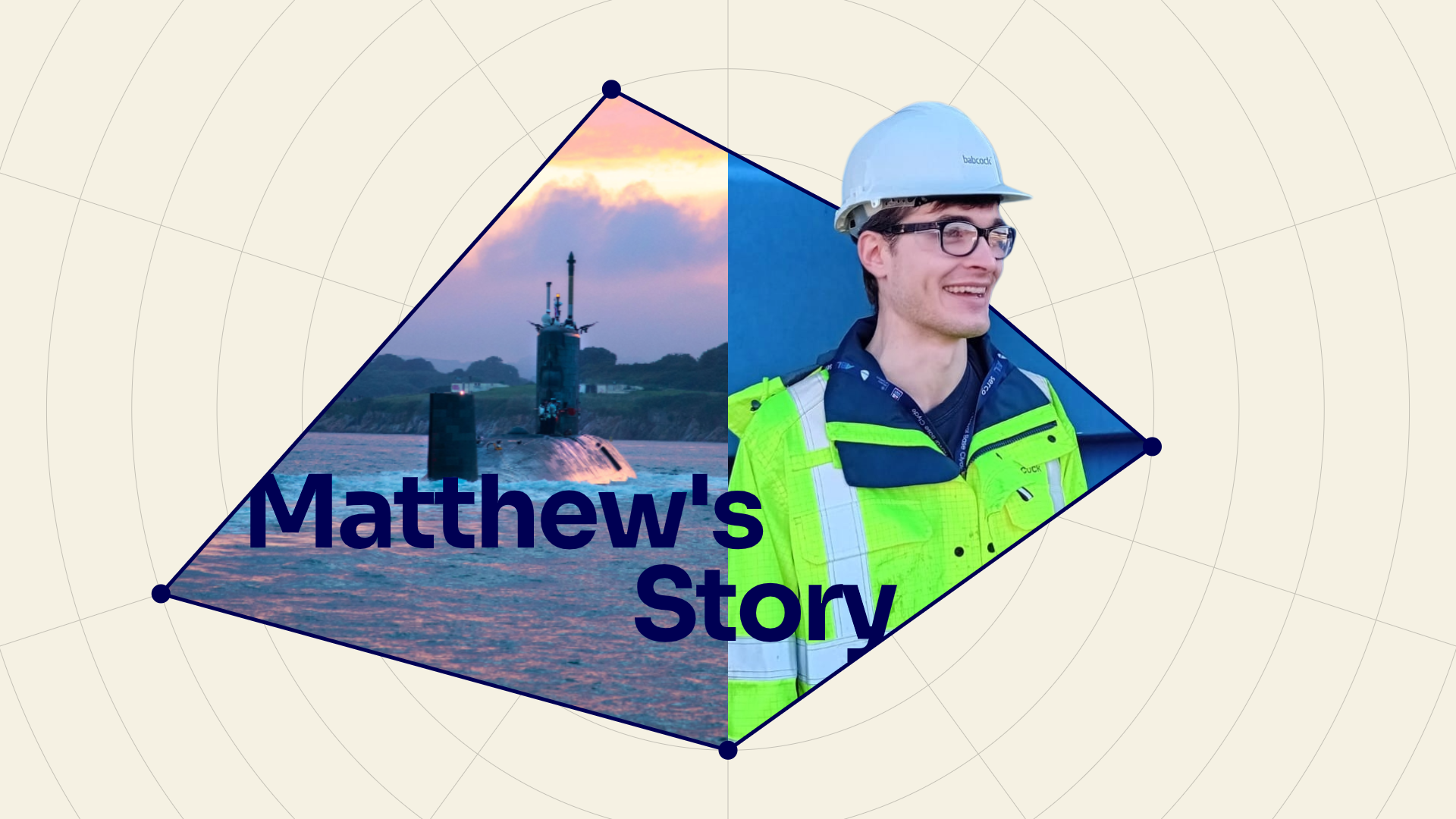
As a Mechanical Engineering Graduate at Babcock I’ve had the opportunity to work across several different teams supporting HMNB Clyde. While each placement has a different focus, they all contribute towards the same goal: ensuring submarines can safely deploy to sea and safely return from operations.
One of my placements was with the Non-Destructive Examination (NDE) team. Their role is to inspect pipes, components and structures without damaging them, using specialist techniques to identify cracks, degradation and defects before they become bigger problems. It showed me how important preventative maintenance is and how engineering can help identify issues before they affect operations.
I also spent time with a submarine maintenance planning team. Whenever a submarine enters maintenance, there can be hundreds of activities taking place at the same time. The planning team coordinates that work, making sure activities are carried out safely, efficiently and in the correct order. It gave me a real appreciation for the amount of organisation and teamwork required behind the scenes.
My current placement focuses on developing ways to carry out maintenance while submarines remain afloat. This includes looking at technologies such as remotely operated vehicles, diver-supported maintenance and alternative access methods that could reduce the need for submarines to enter dry dock.
Before joining Babcock, I didn’t realise this type of work even existed. I assumed maintenance simply happened in dry dock. Learning about these technologies and their potential to improve submarine availability has been one of the most interesting parts of my graduate scheme so far.
One thing that makes engineering at Clyde different is the proximity to operational submarines. You’re not simply working on theoretical projects. You’re working alongside active submarines and the teams responsible for maintaining them. That creates a direct connection between the engineering work being carried out and the fleet it supports.
Rotating through multiple teams has helped me build relationships with people across different disciplines and identify the areas of engineering that interest me most. For me, that’s one of the reasons Babcock is such a good place to begin an engineering career. The graduate scheme provides opportunities to learn from experienced engineers, work on a range of projects and gain exposure to areas of the business that you might never encounter in a single-role position.
Alongside the development opportunities, the work-life balance is a real benefit. At Clyde, we work a four-day week, which effectively creates a three-day weekend every week. Combined with flexible working arrangements where appropriate, it provides a positive balance between professional development and life outside work.
Looking back, what I’ve enjoyed most is the opportunity to see how many different engineering disciplines contribute to supporting the submarine fleet. Every placement has introduced me to new challenges, new systems and new ways of thinking.
For someone considering a career in mechanical engineering, I’d describe the role as a combination of problem-solving, learning and collaboration. Whether inspecting critical equipment, planning maintenance activities or exploring new technologies, mechanical engineers play an important role in ensuring submarines remain safe, operational and ready to support the Royal Navy when needed.
Explore our Graduate Mechanical Engineering Programme.